
Philippine Search Engine Optimization Specialists
We conduct in-depth keyword research and a full analysis of your website to determine your current search visibility, allowing us to identify the most effective keyword phrases for attracting your ideal customers through digital marketing.
Our Services
We have a strategy, experience, and a proven track record in increasing leads for our clients.

Online Reputation Management

Conversion Rate Optimization
Turn your visitors into customers with our team of experts. We’ll analyze your website and develop a suitable conversion-rate strategy.

Real-Time Social Media Analytics
How AI Is Reshaping Access to Information
Introduction
The way people find and use information is changing faster than ever before. For many years, internet use revolved around search engines and visiting websites. Today, however, attention is increasingly shifting toward intelligent AI assistants. These systems do more than answer questions—they analyze information, identify relationships, and increasingly perform complete tasks on behalf of users.
This development represents far more than a technological improvement. It fundamentally changes how people acquire knowledge, make decisions, and interact with digital services.
This document explains how this shift emerged, the technology behind it, and what it means for organizations, websites, and users.
1. The Era of Search Engines
As the internet grew exponentially, a new challenge emerged: how do you find exactly the information you need among millions of web pages?
Search engines provided the solution. They crawled websites, indexed their content, and made it searchable. When users entered a query, the search engine presented a list of the most relevant results.
In broad terms, the process worked as follows:
- The user enters a search query using keywords.
- The search engine compares the query against its massive index of websites.
- Complex algorithms determine which pages are most relevant.
- The user chooses which websites to visit.
Most of the work therefore remained with the user. They had to open multiple sources, compare information, identify inconsistencies, and ultimately draw their own conclusions.
Search engines essentially functioned as navigation systems: they pointed users in the right direction but rarely provided the complete answer.
2. From Keywords to Meaning
As search technology became more sophisticated, the focus gradually shifted from matching keywords to understanding the meaning behind a query.
Search engines became increasingly capable of recognizing relationships between people, companies, locations, and topics. As a result, they could provide direct answers far more often without requiring users to visit multiple websites.
Key developments included:
- recognizing entities such as people, organizations, and locations;
- displaying direct answers above traditional search results;
- generating summaries from multiple information sources;
- supporting voice search in natural language.
As a result, searching gradually evolved from finding web pages to obtaining information.
3. The Rise of AI Assistants
The introduction of modern language models marked the beginning of an entirely new era.
An AI assistant does much more than retrieve documents. It understands the user’s question, analyzes available information, and generates a response tailored to the user’s context.
As a result, technology has evolved from a search tool into a digital conversational partner.
A modern AI assistant can:
- interpret complex questions;
- combine information from multiple sources;
- write and rewrite text;
- analyze documents;
- create tables;
- write code;
- generate summaries;
- develop plans;
- remember follow-up questions and previous context.
The result is a far more natural interaction in which users no longer need to think about the “right” search keywords.
4. Key Differences
| Aspect | Traditional Search Engine | AI Assistant |
|---|---|---|
| Purpose | Display relevant websites | Provide direct solutions |
| Input | Keywords | Natural language |
| Output | List of search results | Integrated answer |
| Interaction | Separate searches | Ongoing conversation |
| Processing | Ranking pages | Interpreting and reasoning |
| User’s role | Gather information manually | Review and refine responses |
| Personalization | Limited | Highly context-aware |
The most significant change is the shift in cognitive effort. Previously, users had to collect, compare, and synthesize information themselves. Today, AI performs much of that work.
5. The Technology Behind Modern AI
Today’s generation of AI assistants has become possible through several complementary technological innovations.
Large Language Models (LLMs)
Large Language Models (LLMs) form the foundation of nearly every modern AI assistant.
These models are trained on enormous amounts of text, enabling them to recognize language patterns. As a result, they can do far more than apply grammar rules—they understand context, follow logical reasoning, and generate entirely new text.
This enables them to answer questions, summarize information, translate languages, write code, and execute complex instructions.
Retrieval-Augmented Generation (RAG)
A language model does not always possess the most up-to-date information. To address this limitation, many AI systems combine a language model with a retrieval component.
The process works as follows:
- The user asks a question.
- The system searches for current information.
- Relevant documents are retrieved.
- These documents are provided as context.
- The AI generates an answer based on those sources.
This approach produces responses that are more current, reliable, and better supported by evidence.
AI Agents
The latest generation of AI goes beyond generating text.
Increasingly, AI systems can independently perform multiple steps to achieve a specific goal.
Examples include:
- analyzing data;
- processing files;
- performing calculations;
- controlling software applications;
- managing calendars;
- drafting emails;
- generating reports.
Instead of simply providing a single answer, the AI works through a sequence of actions to arrive at a complete solution.
6. New Challenges
Although these developments are remarkable, they also introduce important challenges.
Reliability
AI can occasionally present information that is inaccurate or insufficiently supported by evidence. Human oversight therefore remains essential, particularly in legal, medical, and financial contexts.
A Changing Web
As users increasingly receive answers directly from AI assistants, they visit fewer websites. This shift may significantly impact publishers, news organizations, and businesses that depend on advertising revenue or organic search traffic.
Privacy
To provide truly personalized assistance, AI assistants often require access to documents, calendars, emails, and other personal information. This demands robust security measures and clear policies governing data usage.
Computing Power
Generating AI responses requires substantially more computational resources than a traditional search query. As a result, both energy consumption and infrastructure costs continue to increase.
7. What Does This Mean for Organizations?
For businesses, online visibility is undergoing a fundamental transformation.
Where optimization once focused primarily on search engines, it is now increasingly important to ensure that information is understandable, trustworthy, and well structured for AI systems.
This requires:
- high-quality content;
- clear information architecture;
- up-to-date information;
- reliable source attribution;
- semantic organization;
- technical optimization.
Organizations that adapt their content accordingly increase the likelihood that AI assistants will use their information when answering user questions.
Conclusion
We are in the midst of a fundamental transformation in how digital information is accessed and delivered. Traditional search engines will continue to exist, but they are increasingly becoming the underlying information layer that powers intelligent AI systems.
Users no longer need to spend as much time searching, comparing, and analyzing information themselves. AI is taking over much of this work, evolving from a search tool into a digital assistant capable of understanding, synthesizing, and transforming information into useful answers or concrete actions.
For organizations, online success will no longer depend solely on achieving high rankings in search engines. Increasingly, success will depend on whether their information is clear, trustworthy, and well structured enough for AI systems to understand, evaluate, and confidently use.
The future is therefore not only about being found—it is about being understood.

Appear On the Front Page of Google!
We offer professional SEO services that help websites increase their organic search score drastically in order to compete for the highest rankings — even when it comes to highly competitive keywords.
Connect with pre-qualified customers
Save time and money
Rely on an experienced and knowledgeable team

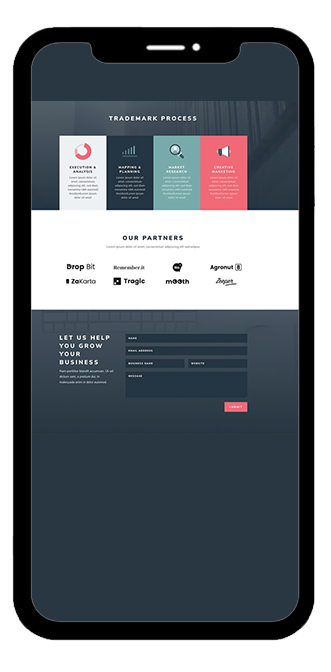
We Design for Mobile Platforms, too.
Statistics show that one in every five owned smartphones globally and one in every 17 owned tablets. Over 50% of mobile websites internet searches are performed on smartphones. And 92% are now searching locally. In 2014, mobile surpasses fixed online access such as PCs.
We Make Your Website Work Everywhere.
If your site will be an excellent design, your potential customers will think you have enough customers and enough income for you to develop a professional website. If a potential customer visits your site, it looks incompetent, this is how they treat you also.
If you are a web designer, of course, to develop your own website, because it will show your expertise. Like others, seeking the company’s strong service, you can do very well, not only in the construction of your internet site, but to get it to find and establish a reasonable increase, you will get traffic in the Philippines like Bacolod SEO and Web Design, Boracay SEO and Web Design, Cebu SEO and Web Design, Iloilo SEO and Web Design, Manila SEO, SEO Alicante and Web Design.

Full Service Philippine SEO Company
Search Engine Optimization Experts
Our team develops effective content strategies for forward thinking companies. We have a proven track record in increasing search engine rankings.

Social Media Marketing Web Development

SILO Structures

Search Engine Optimization

Consultation

Local Search Strategy

Maps Search Optimization

Link Building
Link building is and will continue to be a tremendously important component of Search Engine Optimization (SEO).

Reputation Management

Wordpress Web Design
